Prior Authorization VA Support for Clinics
Prior auth admin is the lane that quietly stalls clinic workflows — submissions sitting in queues, status calls slipping for days. A trained VA owns the paperwork and follow-up so prior auth stops being the bottleneck.
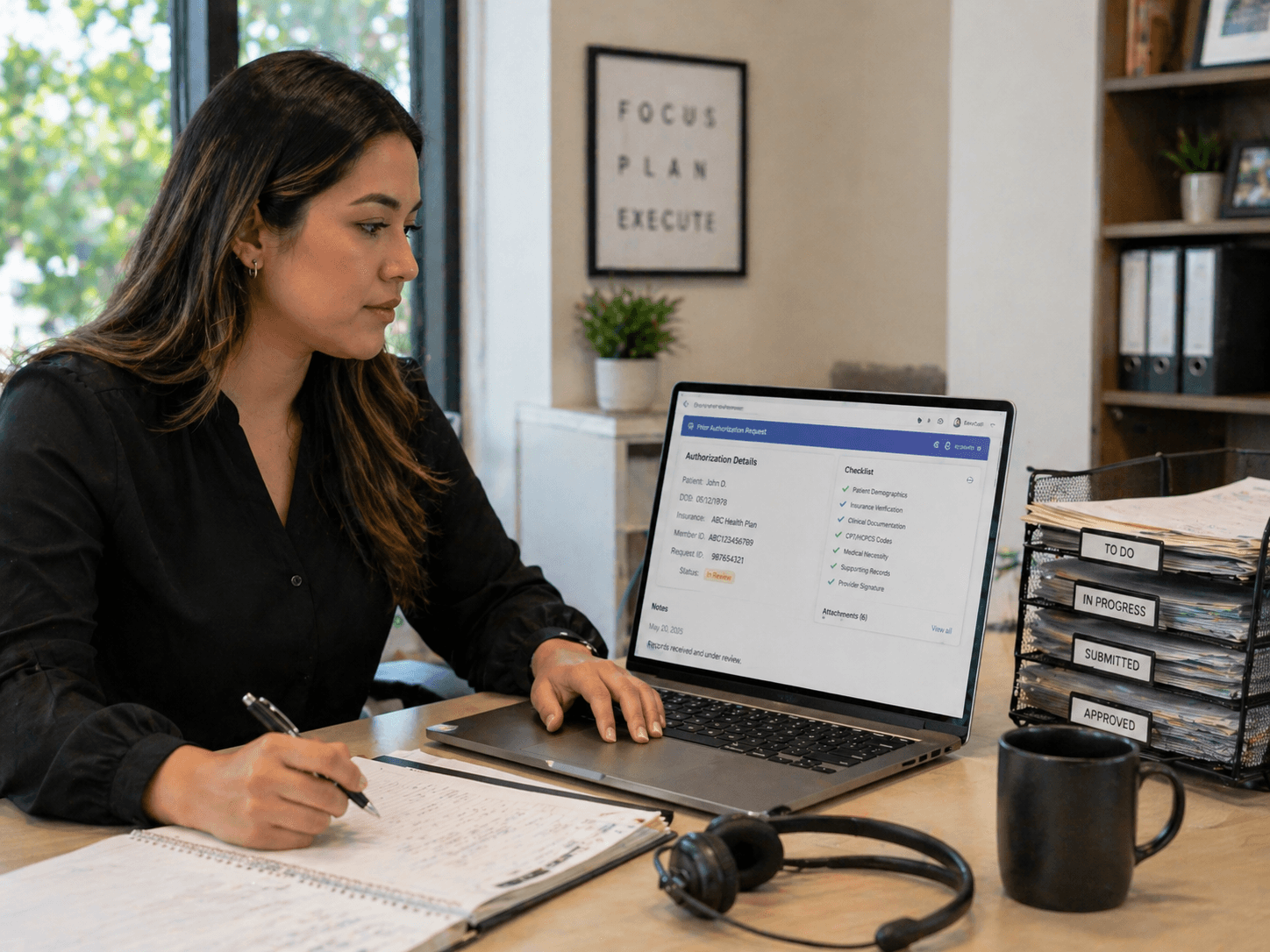
What a Prior Authorization VA Handles
Six recurring admin lanes a trained prior auth VA owns inside your existing payer portals and clinic SOPs.
- Collect required clinical documentation from your team
- Submit prior auth requests to payer portals
- Track authorization status across payers
- Follow up on pending items by phone or portal
- Update clinic staff on approval, denial, or RFI status
- Organize prior auth packets and supporting documents
What stays with clinical staff
- Medical necessity narrative drafting
- Clinical justification authorship
- Provider sign-off on appeals
- Final coding and documentation decisions
Common Prior Auth Workflows
Three of the most common scenarios clinics hand off first, shown as before / with GetVMA.
Specialty Rx Prior Auth
- Before
- Specialty medication PAs sit with the front desk between calls; status only surfaces when the pharmacy chases.
- With GetVMA
- A prior auth VA owns submission, daily status checks, and clinic updates so Rx PAs progress without manual chasing.
Imaging or Procedure Authorization
- Before
- Surgery and imaging PAs require multi-step documentation that gets fragmented across providers and admin.
- With GetVMA
- A VA assembles the documentation packet, submits to the payer, and tracks status through to approval.
Payer Follow-Up Calls
- Before
- Calling payer reps for status sits at the bottom of the front desk’s priority list and slips for days.
- With GetVMA
- A VA runs the daily call list to payer reps, logs outcomes, and escalates stuck cases to clinic staff.
Prior Authorization VA FAQs
Submission, status tracking, follow-up, and documentation organization. The VA owns the admin workflow around prior auth so clinical staff only step in for medical necessity authorship and provider sign-off.
No. Medical necessity narratives, clinical justification, and final sign-off stay with the clinical team. The VA handles paperwork, portals, and follow-up.
Assistants work inside the payer portals and call queues your clinic already uses. They follow your clinic-specific SOPs for each payer’s submission requirements.
A prior auth VA layers on top of your billing or RCM team — owning the upfront authorization step so claims get submitted cleanly. We coordinate with your existing team during scoping.
Most clinics begin in 7–14 days, depending on payer access setup, portal credentials, and the depth of clinic-specific training required.
Get a Prior Auth VA Plan for Your Clinic
Tell us your payer mix, current backlog, and the workflows you want covered. First month 50% off.